
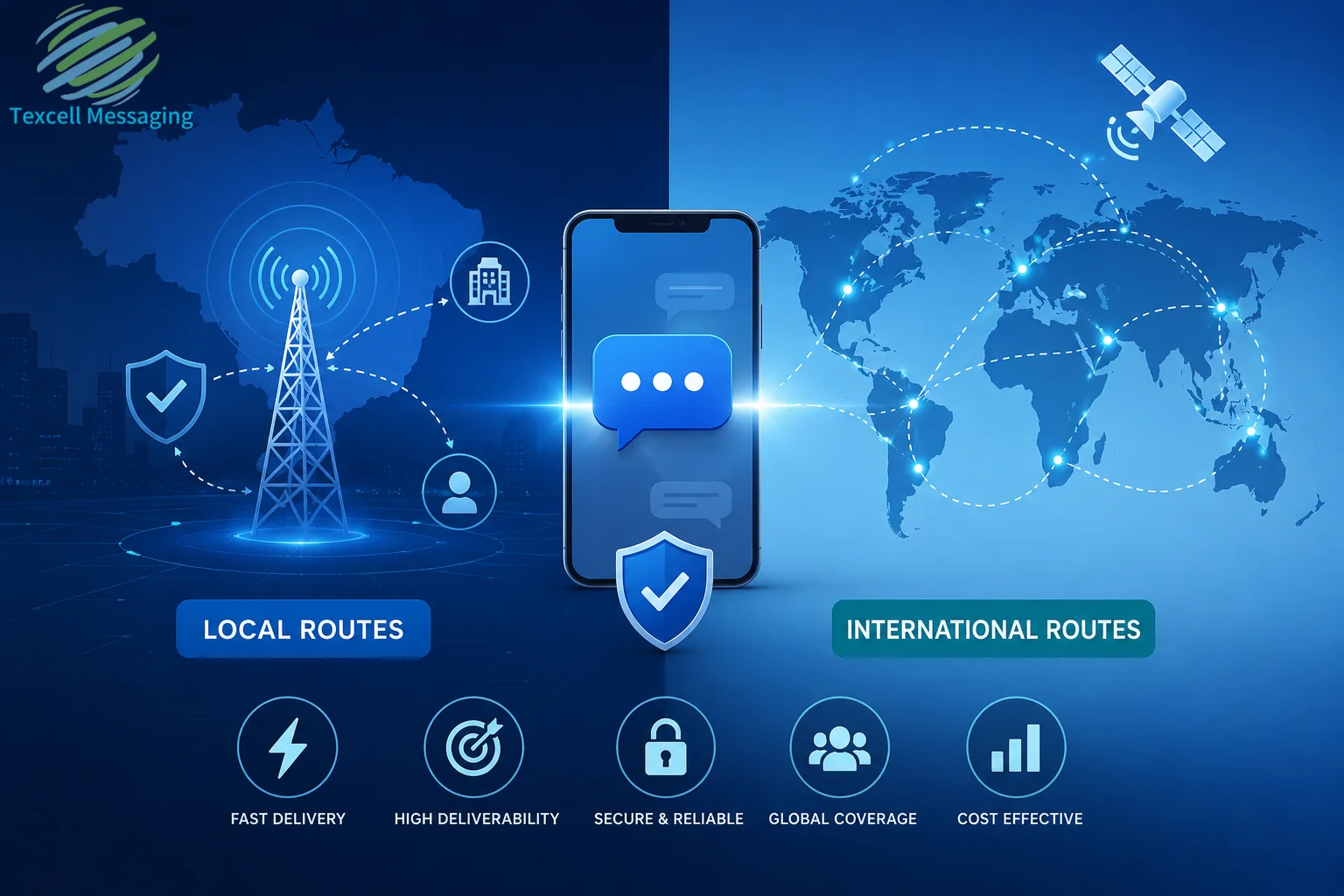
Local Routes vs International Routes in SMS – Which One Is Better for OTP and Marketing Campaigns?
In today’s mobile-first business environment, SMS remains one of the most effective communication channels for enterprises worldwide. Whether it is OTP verification, promotional campaigns, member notifications, banking alerts, or iGaming traffic, businesses continue to rely on SMS because of its unmatched open rate, instant delivery, and global reach.
However, one critical factor often determines the success or failure of an SMS campaign: the route type being used.
For companies sending international traffic, understanding the difference between local SMS routes and international SMS routes is essential. Choosing the wrong route can lead to delays, filtering issues, low delivery rates, or even carrier blocking.
At Texcell Messaging, we help businesses optimize global SMS delivery through stable routing strategies and enterprise-grade infrastructure. As a professional global SMS gateway, Texcell Messaging supports OTP authentication, marketing campaigns, transactional notifications, and high-volume iGaming messaging across multiple countries and operators.
What Are Local SMS Routes?
Local SMS routes refer to message delivery channels that terminate traffic domestically within a target country. These routes are typically connected directly to local telecom operators or licensed local aggregators.
For example, if a business sends SMS traffic to users in Brazil through a Brazilian operator-approved connection, this is considered a local route.
Local SMS routes are commonly used for:
- OTP verification messages
- Banking authentication
- E-commerce transaction alerts
- Government notifications
- High-priority enterprise traffic
Advantages of Local SMS Routes
1. Higher Delivery Rates
Because local routes follow domestic carrier regulations and filtering policies, they usually achieve significantly higher inbox placement and delivery success.
This is especially important for OTP SMS provider services where delays of even a few seconds can reduce conversion rates.
2. Faster Delivery Speed
Local routing often provides lower latency because the traffic remains inside the country’s telecom ecosystem instead of passing through multiple international hubs.
For industries such as fintech, crypto, and iGaming, delivery speed directly impacts user experience and customer retention.
3. Better Sender ID Support
Many local routes support branded Sender IDs, allowing businesses to display company names instead of random numbers.
This improves trust, open rates, and anti-fraud protection.
4. Regulatory Compliance
Countries such as India, UAE, Saudi Arabia, and Indonesia enforce strict telecom regulations. Local routes are generally more compliant with local DLT systems, registration rules, and anti-spam requirements.
What Are International SMS Routes?
International SMS routes deliver traffic across borders using overseas carrier connections or international aggregators. These routes are generally more flexible and lower cost, making them attractive for large-scale bulk SMS campaigns.
International routes are widely used for:
- Global promotional campaigns
- Lead generation traffic
- Flash sale marketing
- International business notifications
- Cost-sensitive messaging projects
Advantages of International SMS Routes
1. Lower Cost Structure
One of the main advantages of international SMS routes is pricing efficiency. Businesses sending millions of messages monthly often use international routing to reduce operational costs.
2. Wider Geographic Reach
International routes allow companies to quickly expand traffic into multiple countries without requiring direct local registration in every market.
This is useful for startups and rapidly scaling SaaS businesses.
3. Flexible Traffic Management
International SMS routes can provide dynamic routing capabilities, enabling providers to switch paths based on carrier conditions, throughput, and pricing.
Challenges of International SMS Routes
Although international routing can be cost-effective, it may also introduce certain risks.
- Lower delivery rates in heavily regulated countries
- Potential message filtering by local operators
- Longer delivery delays
- Sender ID restrictions
- Higher fraud detection sensitivity
For OTP authentication traffic, relying solely on low-cost international routes may negatively affect verification success rates.
How to Choose the Right SMS Route?
The ideal routing strategy depends on your business model, traffic type, and target region.
Businesses should consider the following:
- Is the traffic OTP or marketing related?
- How important is delivery speed?
- Does the country require Sender ID registration?
- What are the local telecom regulations?
- Is cost optimization or delivery quality the priority?
For mission-critical OTP traffic, local SMS routes are usually the preferred option. For large-scale promotional campaigns, international SMS routes may offer better scalability and cost efficiency.
Why Businesses Choose Texcell Messaging
At Texcell Messaging, we understand that no single routing model fits every business scenario.
Our team helps enterprises build optimized messaging strategies based on destination country, operator filtering behavior, campaign type, and delivery goals.
With extensive experience in global SMS infrastructure, Texcell Messaging provides:
- Global bulk SMS delivery
- Stable OTP verification channels
- Marketing SMS solutions
- iGaming messaging traffic support
- Custom Sender ID solutions
- Multi-route optimization
- Real-time delivery monitoring
Whether you need high-conversion OTP delivery or scalable international marketing traffic, Texcell Messaging can help you improve both delivery quality and operational efficiency.
Conclusion
The difference between local routes and international routes in SMS goes far beyond pricing.
Choosing the correct routing strategy can directly impact delivery rates, customer experience, security performance, and marketing ROI.
As global telecom regulations become increasingly strict, businesses need professional SMS partners that understand both technical routing and local compliance.
Texcell Messaging continues to help enterprises worldwide build stable, scalable, and compliant SMS communication systems.
To learn more about our SMS solutions, visit Texcell Messaging global SMS gateway or get started now.